Morning Commute Disrupted at New Hope Church Road as Major S-Line Construction Begins
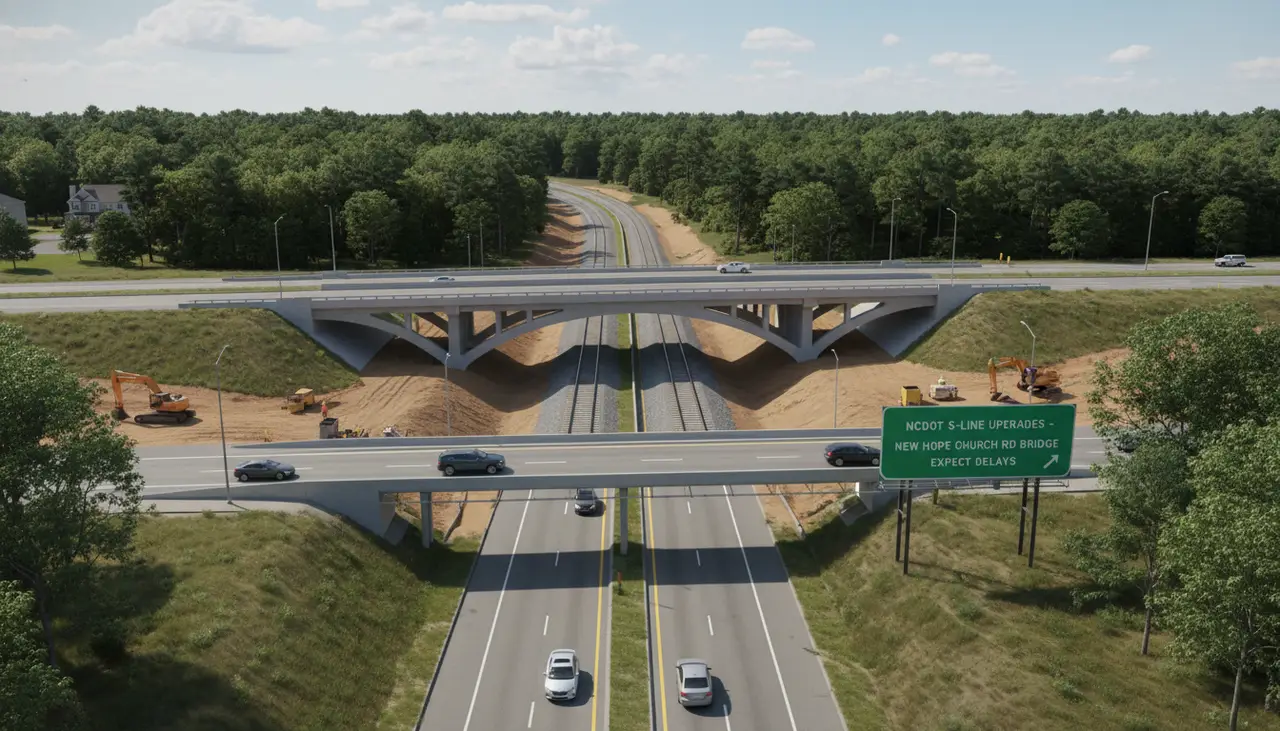
It’s 7:30 a.m. on a Tuesday in the Brentwood neighborhood. Drivers inch forward at the intersection of New Hope Church Road and St. Albans Drive, where orange cones and heavy machinery have transformed the familiar route into a construction zone. The usual hum of morning traffic is punctuated by the slow grind of bulldozers and the clang of steel beams. Pedestrians, including parents walking kids to nearby schools, navigate carefully around narrowed sidewalks and temporary barriers.
This is just the start of a multi-year overhaul that will reshape New Hope Church Road as part of the North Carolina Department of Transportation’s (NCDOT) S-Line Project, a major infrastructure upgrade connecting Raleigh and Wake Forest. Construction officially began in February and will last three years, with a $23 million budget specifically allocated for this stretch. The project includes building a new bridge at New Hope Church Road, set to open by summer 2025, and adding pedestrian accommodations and bike lanes.
What’s Happening on New Hope Church Road and Beyond
The New Hope Church Road project is the first phase of a broader S-Line Passenger Train initiative aimed at improving rail service between Raleigh and Wake Forest. Construction on Durant Road has also started in 2024, while work on Millbrook Road and Rogers Road is planned but not yet underway. This effort is part of a multi-state partnership with Virginia, including Petersburg, to secure right of way and improve rail infrastructure extending toward Richmond and Washington, D.C.
Daniel Johnson, NCDOT Secretary, has emphasized the long-term benefits: the project is expected to save more than an hour of travel time between Raleigh and Richmond once the Raleigh to Wake Forest portion is completed, projected for 2032. However, the short- and mid-term effects on local traffic and residents will be significant, especially around New Hope Church Road and nearby neighborhoods.
Why This Matters to Raleigh Residents
If you live, work, or commute around New Hope Church Road, Brentwood, or adjoining neighborhoods, this multi-year construction will affect your daily routine. Expect increased traffic congestion, longer travel times, and potential detours. The new bridge construction and road modifications will reduce lane capacity at key intersections, creating bottlenecks during peak hours.
Safety is a major concern. Pedestrian accommodations and bike lanes are planned, but during construction, narrowed sidewalks and temporary barriers increase the risk of accidents. Families walking children to school and cyclists should be especially cautious. Emergency response times could also be impacted if traffic delays worsen.
For homeowners near the construction zone, heavy equipment and excavation work could cause vibrations and dust, potentially leading to property damage such as cracks in foundations or walls. These risks require vigilance and prompt action to avoid costly repairs.
If You Are Affected by the Construction: What to Do Now
- Plan alternative routes ahead of time to avoid New Hope Church Road during peak construction periods.
- Allow extra travel time for commutes and appointments to reduce stress and avoid rushing.
- Stay informed by following NCDOT updates on construction schedules and road closures.
- Use designated pedestrian paths and bike lanes carefully; avoid shortcuts through unsafe areas.
- Inspect your property regularly for signs of damage such as new cracks, shifting soil, or water leaks.
- Document any property damage with photos and notes immediately.
- Contact your insurance provider if you notice damage potentially linked to construction activity.
When Professional Help Becomes Necessary
Construction zones bring risks that can quickly escalate if ignored. Here are three critical moments when you must seek professional assistance:
- Property Damage: If you notice cracks in your home’s foundation, walls, or ceilings, contact a licensed contractor or structural engineer immediately. Ignoring these signs can lead to costly repairs and compromise your household’s safety.
- Plumbing or Electrical Issues: Heavy construction vibrations and equipment can damage underground pipes or wiring. If you experience leaks, low water pressure, or frequent electrical outages, you need to call a plumber or electrician without delay to prevent further property damage and health hazards.
- Safety Concerns on Your Property: If construction debris or dust has infiltrated your home, or if you notice pest activity increasing due to disturbed soil and vegetation, contact restoration companies or pest control experts. Delaying cleanup or pest control can worsen indoor air quality and create health risks for your family.
Additionally, if you face legal issues related to property damage claims or disputes over right of way, consult a local attorney experienced with construction and property law. Early legal advice can protect your rights and prevent costly litigation later.
Raleigh Residents Will Encounter This Zone Daily
New Hope Church Road is a vital artery for many Raleigh neighborhoods, including Brentwood and adjacent communities. It connects local streets like St. Albans Drive and serves as a key route for commuters heading toward Wake Forest and beyond. Residents traveling to work, school, or running errands will feel the impact of lane closures, detours, and construction noise.
With construction slated to last three years, the inconvenience will be prolonged. The new bridge and infrastructure improvements promise long-term benefits, but the immediate challenges require preparation and professional support to navigate safely and protect your property.
Where This Is Happening in Raleigh
The heart of this construction is New Hope Church Road, near its intersection with St. Albans Drive. This area is part of the larger Brentwood neighborhood, a community heavily reliant on this corridor for daily travel. Nearby roads, including Durant Road, Millbrook Road, and Rogers Road, are also part of the broader S-Line upgrade plan, with work starting or planned in the coming years.
Residents traveling between Raleigh and Wake Forest, or connecting to the Northeast rail line toward Richmond and Washington, D.C., will encounter ongoing construction zones. This project touches not just the immediate vicinity but the broader regional transportation network, affecting both local and through traffic.